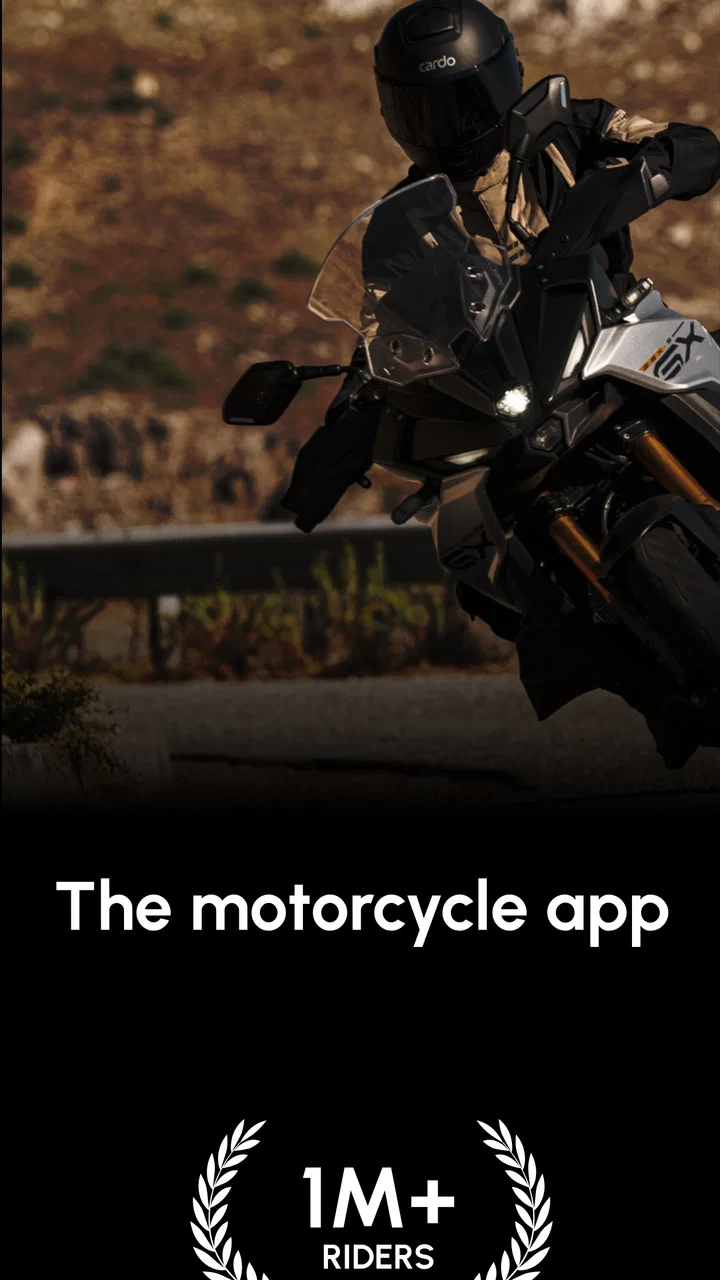
Cardo Ride - Motorcycle App
- 4.4
- Rating
- 500.00K
- Installs
- Free
- Price

 Analysis by App-foxy
I spend a lot of time looking for navigation tools that understand why a motorcyclist is on the road in the first place. A car-focused map can get me from one address to another, but it rarely feels built around the rhythm of a ride, the need to prepare a route before leaving, or the value of sharing the experience with other riders. Cardo Ride takes a more focused approach. It is a free Maps & Navigation app from RISER Gmbh that combines route planning, ride tracking, and access to the global Cardo Ride community.
After using it as a companion for motorcycle trips, I see its main appeal clearly: it is less about replacing every navigation tool on a phone and more about bringing planning, recording, and rider-oriented interaction into one place. That makes it interesting for weekend riders and people who like keeping a record of their journeys. It is also available for Android devices running at least Android 8.0, which keeps the entry requirement fairly approachable for users with older phones.
My overall impression is that Cardo Ride works best when I prepare before the helmet goes on. The planning stage is where the app feels most useful, while the ride itself benefits from having the route and purpose already settled. It is not the universal answer for every kind of navigation, and I would not treat it as a replacement for a dedicated road atlas or a familiar everyday map app. Still, for riders who want their motorcycle trips to feel more deliberate and connected, it offers a convincing package.
You May Also Like

 Blood Strike: 2.5 Anniversary
Blood Strike’s Loadouts Turn Every Drop Into a Tactical Gamble
A close look at Blood Strike’s custom loadouts: how fast access to signature weapons reshapes its battle royale rhythm, rewards preparation, and narrows the gap between fights.

 Pandora - Music & Podcasts
Pandora’s Music Is Easy to Start, but Harder to Recover
Pandora’s strength is its low-effort path from a seed to a station. Its weak spot is how much confidence it asks you to place in connection, setup, and quiet recovery.

 8 Ball Pool
 Is Built on Rivalries, Rematches, and Routine
A close look at the rivalries, rematches, shared routines, and unanswered safety questions that turn a quick pool match into a persistent mobile community.

 Samsung Music
’s Quiet Strength Is Playing What You Already Own
Its reach comes less from spectacle than from dependable access to a personal library. That simplicity is both the app’s strongest retention engine and its ceiling.

 AccuWeather: Weather Radar
AccuWeather Review: A Quick, Clear Forecast for Everyday Decisions
For everyday plans, the best forecast is the one you can understand quickly. AccuWeather makes rain timing, radar, and local conditions easy to act on, with a few trade-offs.

 Hill Climb Racing
Why Hill Climb Racing Still Turns Crashes Into One More Run
A tiny car, a bumpy hill and one more upgrade: Hill Climb Racing keeps resurfacing because its simple chaos makes every near-miss feel personal.
More From Our News Desk



How the app feels before and during a ride
Before I set off, I find it useful to decide what I want the ride to be: a route to follow, a journey to record, or simply a chance to explore. That distinction helps me use Cardo Ride with a clear purpose instead of adding screen time to the trip. Once the ride is underway, I keep interaction brief and save route changes or community browsing for a stop.
Route planning is the real starting point
The first thing I would do with Cardo Ride is plan a ride when I am not already standing beside the motorcycle. That sounds obvious, but it changes how useful the app becomes. Instead of opening it only when I need immediate directions, I can use it as a preparation tool: think about the kind of outing I want, shape the route, and then begin the ride with fewer decisions competing for my attention.
This workflow suits riders who care about the journey rather than simply arriving. A short evening loop, a scenic day trip, or a longer route shared with friends can all benefit from being considered in advance. I particularly like the idea of separating planning from tracking. Planning gives the ride a structure; tracking later gives me something to look back on. Those are different needs, and putting them together makes more sense for motorcycling than relying only on a standard point-to-point navigation app.
There is also a practical safety benefit to preparing while stationary. I can examine the route before pulling away, make changes without rushing, and avoid trying to make complicated decisions while riding. That is one of the less obvious strengths of this type of app: its value is not only the map on the screen, but the reduction of last-minute interaction once the trip has started.
Perceived speed and responsiveness
In normal use, I judge a navigation app less by raw speed than by whether it keeps up with the task in front of me. Cardo Ride feels most comfortable when I use it in a simple sequence: open the app, prepare the route, start tracking, and then leave the phone alone as much as possible. That approach makes the experience feel calm and purposeful rather than constantly interactive.
I would not promise the same impression in every situation, because responsiveness depends on the phone, the operating system, and what else is running. A newer device is likely to feel more comfortable when switching between planning screens and other tasks, while an older Android phone may make the process feel less immediate. The minimum requirement of Android 8.0 means the app can reach a broad range of devices, but compatibility should not be confused with identical performance on every handset.
For me, the important point is that the app does not need to be treated like a dashboard that demands constant attention. Its best rhythm is set up first, then monitored sensibly. That reduces the pressure on both the phone and the rider. If I wanted a navigation tool for rapid address searches, frequent detours, and continuous destination changes, a mainstream map app might feel quicker simply because that is its central purpose.
A realistic everyday scenario
Imagine leaving home on a Saturday morning with two hours available before lunch. I would open Cardo Ride over breakfast, decide whether I want a relaxed loop or a more purposeful trip, and prepare the route before putting on my gear. Once outside, I would start the ride tracking and keep the phone mounted or safely accessible according to my normal setup. At the first stop, I could check the progress, pause to take a break, and later use the recorded ride as a reminder of where I went.
That scenario shows where the app fits naturally. It is not just a tool for getting to a shop or an office. It gives a casual ride a beginning, middle, and end. For someone who regularly forgets which roads they enjoyed, the tracking side can be more valuable than another set of turn-by-turn instructions.
What happens during heavier use
The demanding moments are likely to come when I ask the app to do several things close together: adjust a planned route, move between screens, track a ride, and interact with community content during the same outing. That is when I would pay attention to heat, battery use, and whether the phone remains comfortable for the rest of the day. Those concerns are not unique to Cardo Ride, but they matter more on a motorcycle because the phone may already be handling navigation, a bright display, mobile connectivity, and other riding-related tasks.
My practical advice is to do the complicated work before departure. If I want to explore alternatives, I would do that at a café or at home rather than beside a busy road. During the ride, I would keep the app’s role narrow: follow the prepared plan and record the journey. This is both easier on the device and better for concentration.
Another useful habit is to begin with a fully charged phone and a mounting arrangement that does not require repeated handling. I would also avoid treating the community area as something to browse continuously while moving. The social side is more enjoyable when used during stops, where I can read, compare, or respond without turning the ride into a series of interruptions.
For long trips, I would make a deliberate decision about power. A motorcycle charging setup, a battery pack used while stopped, or a second navigation device may be sensible depending on distance and phone condition. Cardo Ride itself does not remove the ordinary resource demands of using a phone for navigation and tracking. That is an important trade-off for riders with aging batteries or smaller devices.
Tracking changes how I remember a trip
Tracking is not merely a technical extra for me. It changes the way I think about a ride after it ends. A route that felt like a simple afternoon outing becomes something I can revisit mentally: where I started, how the trip unfolded, and which parts were worth repeating. This is especially useful for riders who discover roads organically and later want to remember the shape of the journey.
There is a subtle trade-off here. Recording every ride can become clutter if I never organize or revisit the results. I would use tracking selectively for trips that matter to me rather than automatically turning every short errand into a saved adventure. That makes the history more meaningful and avoids making the app feel like a passive logbook that I never open again.
The community angle is useful, but not universal
The Cardo Ride community gives the app a more social identity than a basic navigation utility. I can understand the appeal of connecting with other riders, particularly when planning is part of the fun. A community can help a solo rider feel less isolated and can make a route feel like part of a wider motorcycle culture rather than a private line on a map.
At the same time, not every rider wants a social layer. Some people simply need dependable directions and prefer to keep their rides private or uncomplicated. For them, the community may be something they visit occasionally rather than a central reason to keep the app installed. I would not choose Cardo Ride solely for the social element unless I genuinely wanted that connection.
The best way to use it is to treat community interaction as an optional extension of the riding experience. Plan and track because those functions are personally useful; explore the community when it adds inspiration or helps me stay connected. That keeps the app valuable even on days when I ride alone and do not want to interact with anyone.
Reliability in real riding conditions
Reliability is more than whether an app opens successfully. For a motorcycle rider, I want confidence that the planned activity will remain understandable when the ride becomes busy, the phone is mounted at a distance, or I stop paying attention to the screen. Cardo Ride feels more reliable when I use it with a clear plan and sensible expectations rather than asking it to solve every navigation problem dynamically.
I would still build a backup habit. Before leaving, I would note the general direction and important stops, and I would avoid depending on any single phone app as my only source of orientation. That is not a criticism aimed specifically at Cardo Ride; it is simply good practice for motorcycle travel. A dead battery, poor connectivity, or a device problem can affect any mobile navigation setup.
The app’s history also gives me some reassurance that it is not a brand-new experiment. It was released in September 2016 and has reached over half a million installs, with an average rating of 4.4 from around five thousand ratings. Those figures suggest a meaningful user base and sustained interest, although they cannot guarantee that every rider will have the same experience on every phone.
In my use, the most dependable approach is to keep the route preparation simple and avoid changing too much while moving. I would also check that the current ride is actually being tracked before setting off, rather than assuming that opening the app automatically means the journey is recording. That small confirmation step can prevent disappointment at the end of a trip.
Recovery after interruptions
Any rider considering a tracking app should think about recovery. What happens if I receive a call, switch briefly to another app, stop for fuel, or accidentally close the screen? The sensible way to use Cardo Ride is to treat interruptions as something to manage deliberately. At stops, I would verify that the ride is still progressing as expected before continuing. This costs only a moment and is preferable to discovering later that an important section was not recorded.
I would also avoid force-closing the app in the middle of a ride unless there is a genuine problem. On a phone that aggressively limits background activity, battery-saving behavior can affect how any tracking application behaves. If a device has a history of stopping apps in the background, I would review its battery settings before relying on it for a long trip. That is a device-level consideration, but it can make the difference between a complete record and a partial one.
Recovery is easier when I divide a long adventure into sensible stages. After a major stop, I can confirm the next part of the plan instead of assuming that everything carried on perfectly. This may sound cautious, but it is exactly the kind of small routine that makes a mobile tool more trustworthy in real use.
Device limits and practical comfort
Cardo Ride is free to install, which makes trying it straightforward, but the experience still depends heavily on the phone carrying it. The current version is 4.6.1, and Android support begins at version 8.0. Those details make it accessible to many users, yet an older compatible phone may not feel as smooth as a newer one, especially during extended tracking or when other navigation-related tasks are active.
Screen size also matters. A compact phone can be perfectly adequate for checking a route while stopped, but it may be less comfortable for reading information quickly from a mount. I would rather use the app to prepare and confirm a route than stare at a small display throughout the ride. The motorcycle should remain the focus, not the screen.
Battery health is another deciding factor. Tracking and navigation can be demanding for a phone, particularly on a long day with a bright display and mobile data in use. Riders with a weak battery should plan for external power or shorter sessions. If I were buying a phone specifically for motorcycle use, I would prioritize battery endurance and readable outdoor display quality at least as much as app compatibility.
Storage and general phone maintenance are worth considering too. Keeping the operating system reasonably current within the supported range, closing genuinely unnecessary background tasks, and starting with enough free space are simple ways to reduce avoidable friction. None of these steps turns an old phone into a new one, but they help the app begin from a stable baseline.
Who should use it, and who should choose something else?
I would recommend Cardo Ride to a rider who enjoys planning routes, wants to record selected journeys, and likes the idea of a broader riding community. It is especially appealing if a motorcycle trip is an activity in its own right rather than merely transportation. The combination of preparation and ride history gives the app a clear identity.
I would be more cautious about recommending it to someone whose main need is daily commuting with constant address searches. A conventional maps app may be better for finding businesses, reacting to changing appointments, and handling ordinary urban errands. Likewise, a rider who wants a specialized navigation system with dedicated hardware, extensive offline planning, or highly detailed touring controls may prefer a more focused alternative.
There is also a privacy and simplicity question that each user has to answer personally. If I do not want to record rides or engage with a community, I may get more value from a minimal navigation setup. Cardo Ride makes sense when its extra context is welcome, not when I am trying to remove every additional layer from my phone.
Cost, age suitability, and long-term value
The app is free, but optional in-app purchases range from $4.99 to $59.99 per item. I would begin with the free experience and only consider spending money after identifying a specific feature or workflow that I use regularly. That approach prevents the price range from becoming an assumption about what every rider needs.
Its content rating is Teen, so families and younger users should consider that rating alongside the nature of motorcycle riding itself. The app is designed around routes, rides, and a rider community; responsible use still depends on the person using it, especially when a phone is involved on the road.
The developer, RISER Gmbh, has positioned the product around a specialized audience rather than trying to make it a generic map for everyone. That focus is a strength because the planning and tracking experience feels relevant to motorcycle outings. It is also the reason I would not install it automatically for a non-rider or someone who only needs ordinary pedestrian and car directions.
My performance verdict
Cardo Ride performs best when I respect its intended rhythm: plan while stationary, start tracking with a clear purpose, keep interaction limited during the ride, and review or share the experience afterward. Under those conditions, it feels like a focused motorcycle companion rather than an overloaded general-purpose map. Its perceived speed is most convincing during straightforward workflows, while heavier multitasking naturally places more pressure on the phone and the rider.
The app’s strongest qualities are its motorcycle-specific perspective, its combination of route planning and ride records, and the optional community layer. Its main limitations are equally practical: it may not replace a full everyday navigation service, long sessions can demand careful battery planning, and users who dislike social or tracking features may find the package more elaborate than necessary.
I would install it if I wanted to turn occasional rides into planned experiences and keep a useful memory of where I had been. I would skip it if my priority were only the fastest route to an address or if I already owned a dedicated touring navigation setup that covered planning and recording better. For the right rider, though, Cardo Ride earns its place by making the ride itself the center of the experience. That is a more meaningful idea than simply placing another map on a phone.
FAQs for Cardo Ride - Motorcycle App
01What is Cardo Ride, and what can I use it for?
Cardo Ride is a companion app for compatible Cardo motorcycle communication systems. After pairing your headset, you can adjust audio settings, manage intercom features, configure radio and music controls, install firmware updates, and personalize device behavior from your phone. It is mainly useful for riders who want easier access to settings than using the physical buttons while stopped.
02Which Cardo devices are compatible with Cardo Ride?
Compatibility depends on the specific Cardo model and the app version available for your Android or iPhone. Most recent Cardo communication systems are designed to work with the companion app, but older or discontinued units may have limited support. Before downloading, check the official compatibility list and confirm that your phone’s operating system meets the current requirements.
03Can I use Cardo Ride while riding my motorcycle?
The app can support riding-related features, but it should not be used while actively operating a motorcycle. Pair and configure the device before starting your trip, and make changes only after parking safely. Voice commands and the headset’s physical controls are generally more appropriate on the road, helping you avoid looking at or handling your phone during traffic.
04Does Cardo Ride require an internet connection or a Cardo account?
Basic functions after the headset is paired may work through the phone’s Bluetooth connection without continuous internet access. However, an internet connection can be necessary for downloading firmware updates, accessing support information, loading certain settings, or completing account-related features. Requirements can vary by device and app version, so keep the app updated and review its permissions during setup.
05What should I do if Cardo Ride cannot find or connect to my headset?
First, make sure the headset is switched on, charged, and placed in Bluetooth pairing mode. Keep the phone nearby, enable Bluetooth, and close other apps that may be using the connection. If the device still does not appear, remove previous Bluetooth pairings, restart both devices, and try again. Updating the app and headset firmware can also resolve compatibility or connection problems.
Pros
- Clear group-ride communication with compatible Cardo headsets.
- Useful navigation features designed around motorcycle trips.
- Voice controls help reduce the need to touch the phone while riding.
- Ride planning makes it easier to organize routes with other riders.
- Supports a connected experience across Cardo motorcycle accessories.
Cons
- Many features require a compatible Cardo device to work fully.
- Bluetooth pairing can take time when connecting multiple riders.
- Battery and mobile data usage may increase during long rides.
- Navigation quality depends on phone signal and available map data.
- Some advanced options may feel complex for occasional riders.

Cardo Ride - Motorcycle App
Gallery